
Is Now the Right Time to Enter the Cannabis Industry

India Phoenix • September 27, 2022

A New Green Rush: Is Now the Right Time to Enter the Cannabis Industry?

Online Cannabis School

Could another Green Rush be upon us? If you found yourself asking, “Is the cannabis industry right for me?” or maybe you’ve pondered “Is starting a career in cannabis the right move right now?” now might be the right time depending on where you live!

In 2012, entrepreneurs, investors, and all those wanting a piece of the canna-pie flocked to Washington and Colorado to establish the recreational marijuana industry in the United States. A decade later, the cannabis industry is growing and with newly legalized markets, a new Green Rush may be on its way.

Over the last decade, states across the country have legalized cannabis consumption and sales. Cannabis sales are
expected to top $33 billion by the end of the year. For stoners and non-stoners alike, the growing industry provides the opportunity for career growth and transition.

If you found yourself asking, “Is now the right time for me to join the cannabis industry?” keep reading. We’ve chatted with industry insiders and polled our team to give you the low down on the growing cannabis industry. Whether you’re trying to break into an established market or you’re following the Green Rush in recently legalized states, here are key things to consider about joining the ever expanding cannabis industry. 


The Good - 


1. New Business Licenses = New Opportunities 


As the cannabis industry continues to grow, states across the nation are creating new opportunities to own, work, or support a licensed cannabis business for entrepreneurs and business owners. This is fantastic news for you if you live in a recently legalized state such as Illinois. The US Cannabis industry now boasts 421,000 jobs.

New licensures means that retail cannabis locations will continue to open across your state and will need quality, well-trained staff. Because the industry is growing, getting the right training and development early will help you stand out amongst other candidates. Unlike most industries, there aren’t a ton of opportunities to grow your skill set in the workforce. Rather, you’re better suited finding training options and opportunities in your state that will teach you the ins and outs of the industry to help you land your dream cannabis industry job.
 

Quick Career Growth Potential 

Unlike industries that have long standing, the cannabis industry is fresh. With this, even those entering the industry now can quickly establish credibility and experience within the industry. 3 years in cannabis is the equivalent of 20+ years in a more traditional industry. In fact, most industry executives and experts have less than 10 years of experience with cannabis.

Capitalize on early industry opportunities and be willing to grow with new firms and retail businesses. The likelihood that you’ll be running a dispensary within a few years is pretty high if you start now!

Mission Driven Career 

Are you a stoner like most industry insiders? While cannabis consumption is not required for cannabis industry workers, your personal connection to cannabis is sure to fair you well in establishing your cannabis career. 


Your own passion for the industry is easily your biggest asset. Knowing that the work you’re doing is deeply connected to your personal mission and interests will keep you motivated as you develop your cannabis industry career.


It’s always good for worker morale when you and your coworkers can enjoy an occasional puff, puff, pass session after work hours. 


The Bad - 


High Turnover Rates 


A major challenge for many industries and a major headache for employers is turnover. In a post-pandemic world, employers need to remain competitive to keep quality candidates. While this can be in your favor with quick seniority and promotion opportunities, it can be frustrating to have frequent changes in leadership and staffing.

Many entry-level industry workers cite poor management, toxic culture, and poorly trained leadership as reasons for exiting the industry. A recent survey by Headset found 55% of budtenders who worked at any point over the previous 12 months “had departed by the end of that time period.”

One way to combat this is to be well trained and remain an asset to the teams you join. Bringing top tier skills and staying focused on your ultimate career goals can help navigate changes in staff.


Bad Apples


No industry is without bad apples. Unfortunately, even the cannabis industry has fallen subject to corporate greed and boys-club culture.. While many newcomers to the industry often expect something different, they are are often greeted by the same corporate culture that they were trying to get away from

It’s not all bad! Many industry workers start out working for MSOs or Corporate Cannabis Companies in some capacity. These MSOs can mobilize resources quickly and establish many retail and grow locations in newly legal states which can create a lot of job openings They come from states with more established cannabis programs which mean they have insight into the ins and outs of the industry.These opportunities can serve as a good foot into the industry to build experience and skills quickly.

Pay Structure


Establishing a lucrative career in the cannabis industry is the ultimate goal. That doesn’t mean you won’t have to work through some lower paying gigs to get started.

While there are a plethora of high paying careers in the cannabis industry, entry level jobs sometimes start at or around minimum wage. This can be a challenge when you’re trying to not only establish a career but also maintain quality of life.

The good news is, low paying jobs aren’t forever. As reform in pay equity efforts continue and you further your own career, pay will undoubtedly increase and your opportunities for high paying jobs will multiply. If you’re looking to expedite the process, training and education can help. Most people starting in the industry lack experience and therefore employers can justify lower wages. When you are well trained you bring more to the table and will likely walk away with a high wage than your contemporaries.

In a growing industry, it’s important to maintain a competitive edge, so if you’re looking to start a career in the cannabis industry but low paying jobs won’t work for your budget, getting trained and certified in the industry are ways to increase your earning potential quickly. 


The Ugly Truth - 


The ugly truth is the answer to your question “is now the right time to join the cannabis industry?” is a lot more complicated than a simple generic pros and cons list. Your journey into and in the cannabis industry is unique to you. You may find success in retail spaces with your years of customer service experience. Likewise, you may recognize that your past experience seems completely out of line with the new career you build in the industry and you have to start from scratch. Others will venture into this industry and turnover in the first year.

What is certain is fully accessing all the industry has to offer is a long game. It is not for the wannabe overnight millionaire nor the faint of heart. Succeeding in the cannabis industry takes creativity, commitment, and resilience.


If you’re ready to explore more resources to join the cannabis industry, check out the ICTC Resource Library. Our library is always growing, so share your suggestions and recommendations for resources you’d like to see added! 


Visit our website to learn about our state-approved training, networking events, and online courses for every aspiring cannabis worker. 
By Kristina Ferrari January 29, 2026
What’s the Buzz About Trump Signing the Cannabis Rescheduling Order? A Real Look at What’s Happening, What People Are Saying, and What It Means for the Industry.  If you’ve been scrolling cannabis news feeds lately, you’ve probably seen a flurry of headlines about President Trump and cannabis rescheduling. But what’s real, what’s rumor, and what actually matters for the industry? Let’s break it down in a way that’s interesting, honest, and grounded in facts. The Big Moment: Trump Did Sign an Order, But It Isn’t Full Legalization On December 18, 2025 , President Trump signed an executive order directing the U.S. government to speed up the long-stalled process of moving cannabis from Schedule I , where it’s listed with heroin and LSD, to Schedule III , alongside drugs like Tylenol with codeine. This move was widely reported by major outlets, including CBS News . This is a major federal shift in U.S. drug policy, but here’s the critical nuance: this order does not instantly legalize cannabis nationwide , nor does it immediately change how state-legal markets operate. The executive order directs federal agencies, particularly the Department of Justice and the DEA, to complete the formal legal steps required under the Controlled Substances Act, as outlined by legal analysts at The Ohio State University’s Drug Enforcement and Policy Center . Timeline: When It Happened and What’s Next December 18, 2025 President Trump signed the executive order initiating cannabis rescheduling, officially kicking off the federal rulemaking process. ( CBS News ) Rulemaking Still Pending While the order is signed, the rescheduling isn’t final yet. The Attorney General must complete a formal rulemaking process, which includes issuing proposed rules, allowing for public comment, and then publishing final regulations. According to legal experts at OSU’s Drug Enforcement and Policy Center, this process can take months, or longer, depending on legal challenges or administrative delays. ( Moritz College of Law ) In other words, while the direction is set, implementation takes time. What Industry People & Experts Are Saying Optimistic Reactions Across much of the cannabis industry, reaction has been cautiously celebratory. Cannabis executives, investors, and policy watchers have called the move “historic,” particularly because it signals a federal acknowledgment of cannabis’s medical value. Industry leaders interviewed by Business of Cannabis noted that rescheduling could dramatically shift how cannabis businesses are viewed by regulators, banks, and investors. ( Business of Cannabis ) One of the most talked-about benefits is the potential removal of IRS Section 280E , which currently prevents cannabis businesses from deducting standard operating expenses. Analysts told Cannabis Business Times that eliminating 280E could significantly improve margins and operational stability for licensed operators. ( Cannabis Business Times ) Cautious or Critical Voices Not everyone sees this as a win. Advocacy groups, including the Drug Policy Alliance, warn that moving cannabis to Schedule III still keeps it criminalized at the federal level. This means arrests, enforcement disparities, and access issues could continue, especially for communities already disproportionately impacted by prohibition. ( Drug Policy Alliance ) Others argue the move primarily helps large, well-capitalized companies while leaving social equity and criminal justice reform largely unaddressed. What This Actually Means for the Cannabis Industry 1. Potential Tax Relief If Schedule III status becomes final, cannabis businesses may finally escape the burdens of Section 280E, allowing them to deduct payroll, rent, and other ordinary business expenses, a long-standing pain point for operators. ( Cannabis Business Times ) 2. Expanded Research Opportunities Schedule III classification could make it easier for researchers to study cannabis for medical use. The federal government has already signaled interest in expanding legitimate cannabis research, particularly around medical applications. ( White House ) 3. No Instant Federal Legalization Rescheduling does not mean: Nationwide recreational legalization Interstate cannabis commerce State laws being overridden Local and state laws will still determine access and legality. While moving cannabis to Schedule III is a significant federal policy shift, it does not make cannabis federally legal and does not override existing state cannabis regulations — a distinction legal analysts emphasize in detailed breakdowns of what the rescheduling order does and does not change for the industry, including this analysis from Akerman LLP . 4. Medical Cannabis Likely Comes First Early federal impacts are expected to focus on medical cannabis and research pathways. MJBizDaily reports that recreational markets may see little immediate change, while medical programs could benefit sooner. ( MJBizDaily ) What People Are Saying Online: Hype vs. Reality Social media reactions range from excitement to confusion. Some investors believe rescheduling is the first step toward full legalization, while others caution that implementation still has many hurdles. Online forums like Reddit reflect this divide, with users debating whether this move is symbolic or substantive. ( Reddit Discussion ) Industry professionals tend to focus on tangible outcomes, taxes, research, and regulatory legitimacy, while activists point to what’s still missing: expungement, equity, and true descheduling. ( Drug Policy Alliance ) Bottom Line: A Big Shift, But Not the Finish Line This executive order marks one of the most significant federal changes to cannabis policy in decades. It could: Reduce financial pressure on legal businesses Expand research and medical understanding Increase legitimacy for the cannabis industry But it’s not full legalization, and it doesn’t end prohibition outright. As legal scholars emphasize, rescheduling is just one step in a longer policy journey. ( Moritz College of Law ) For cannabis professionals, students, and businesses alike, this moment is worth watching closely, with excitement, optimism, and realistic expectations.
By Kristina Ferrari October 13, 2025
The body content of your post goes here. To edit this text, click on it and delete this default text and start typing your own or paste your own from a different source.
By Kristina Ferrari May 28, 2025
Illinois Cannabis Industry Prepares for Transition from BioTrack to Metrc
By Kristina Ferrari April 10, 2025
The Rise of THC-Infused Beverages: A Game-Changer for the Cannabis Industry
By Kristina Ferrari January 23, 2025
Navigating the Future: Cannabis Industry Outlook Amidst New Legislation and Leadership As we step into 2025, the cannabis industry stands at a pivotal juncture, influenced by evolving legislation and shifts in political leadership. At the Illinois Cannabis Training Center (ICTC), our mission is to equip individuals with the knowledge and skills necessary to thrive in this dynamic landscape. Federal Rescheduling and Legislative Developments A significant development on the horizon is the potential rescheduling of cannabis under the Controlled Substances Act. The U.S. Drug Enforcement Administration (DEA) is considering reclassifying cannabis from Schedule I to Schedule III, following recommendations from the Department of Health and Human Services. This change could alleviate some federal restrictions, offering financial and operational benefits to the industry ( Reuters ). However, the DEA’s stance has faced criticism from industry advocates who argue that the agency is resistant to change and may be excluding pro-cannabis voices from the discussion ( MarketWatch ). The Trump Administration’s Approach to Cannabis The leadership of President Donald Trump adds a layer of complexity to federal cannabis policy. While Trump has previously expressed support for state-level decision-making on cannabis legalization, his administration’s recent appointments and policy directions raise questions about the future of cannabis reform. Key appointees like Pam Bondi and Marty Makary, both vocal critics of cannabis reform, indicate a potentially conservative approach to policy changes ( New York Post ). Bondi has a history of opposing marijuana legalization efforts, citing public health concerns, while Makary has criticized the rapid expansion of the cannabis industry without sufficient regulation. Trump’s administration has emphasized law and order, which could translate into stricter federal enforcement of existing cannabis laws. This might include intensified scrutiny on interstate cannabis commerce, a clampdown on unlicensed operations, and more rigorous oversight of product safety standards. For example, past federal enforcement under conservative leadership has targeted unlicensed dispensaries and heightened penalties for non-compliance, a trend that could continue ( Brookings Institution ). While these measures aim to address gaps in regulation, they could also impose significant compliance burdens on legal operators, as seen with increased reporting and auditing requirements in other sectors ( CNBC ). Congressional Legislative Efforts and Their Impact In addition to the Trump administration’s policies, Congress is playing a crucial role in shaping the cannabis industry’s outlook. Key legislative proposals aim to address industry challenges and unlock new opportunities: SAFER Banking Act The Secure and Fair Enforcement Regulation (SAFER) Banking Act has gained bipartisan support in Congress. By granting cannabis businesses access to traditional banking services, this act could reduce cash reliance, lower theft risks, and enhance financial stability ( Reuters ). MORE Act The Marijuana Opportunity Reinvestment and Expungement (MORE) Act proposes decriminalizing cannabis at the federal level, expunging past convictions, and investing in communities disproportionately affected by the War on Drugs. Its passage would mark a significant step toward social equity in the industry ( NORML ). States Reform Act Proposed by Representative Nancy Mace, this bill seeks to federally decriminalize cannabis while allowing states to regulate its sale and use. By introducing a tax structure similar to that of alcohol, the States Reform Act aims to provide a unified federal framework without overriding state autonomy. Its implementation could normalize cannabis operations and encourage interstate commerce, though compliance costs may increase ( MarketWatch ). Farm Bill Reauthorization Discussions around the Farm Bill include expanded support for hemp products and clearer regulations on THC limits. These updates could address inconsistencies in hemp regulations, enabling broader market participation for CBD and other hemp-derived products ( Trap Culture AZ ). State-Level Momentum and Market Expansion Despite federal uncertainties, state-level initiatives remain a significant driver of growth. States like Pennsylvania, Hawaii, South Carolina, Wisconsin, and New Hampshire are poised to consider cannabis legalization in 2025 ( Trap Culture AZ ). In Illinois, the cannabis market continues to expand, creating opportunities for trained professionals such as budtenders and dispensary managers. Preparing for Opportunities with ICTC At ICTC, we are committed to empowering individuals to seize these emerging opportunities. Our state-approved programs, such as the Accelerated Dispensary Bootcamp and Dispensary Management Training , provide comprehensive education on regulatory compliance, plant science, and dispensary operations. These skills are essential as the industry adjusts to new federal and state policies. Conclusion  The cannabis industry in 2025 is navigating a complex interplay of federal and state regulations under new political leadership. Legislative reforms, such as the SAFER Banking Act and States Reform Act, present opportunities to normalize and expand the industry, while challenges remain in the form of stricter enforcement and compliance requirements. By staying informed and acquiring essential training, individuals and businesses can position themselves for success. At ICTC, we’re here to support your journey, providing expert training and resources to help you thrive in this ever-evolving industry. Visit us at Illinois Cannabis Training Center to learn more about our courses and how we can help you achieve your goals.
By Kristina Ferrari December 3, 2024
The Latest on Cannabis Rescheduling in the U.S
By Grant Richardson July 26, 2024
What Are the Terpenes in Weed?
By Grant Richardson July 24, 2024
Are Dispensaries Ready for Schedule 3 Cannabis? As cannabis potentially moves to Schedule 3 under federal law, Illinois dispensaries and their managers face a wave of changes. The rescheduling of cannabis would have several significant implications, making it crucial for the industry to stay ahead. Let’s break down what this means.
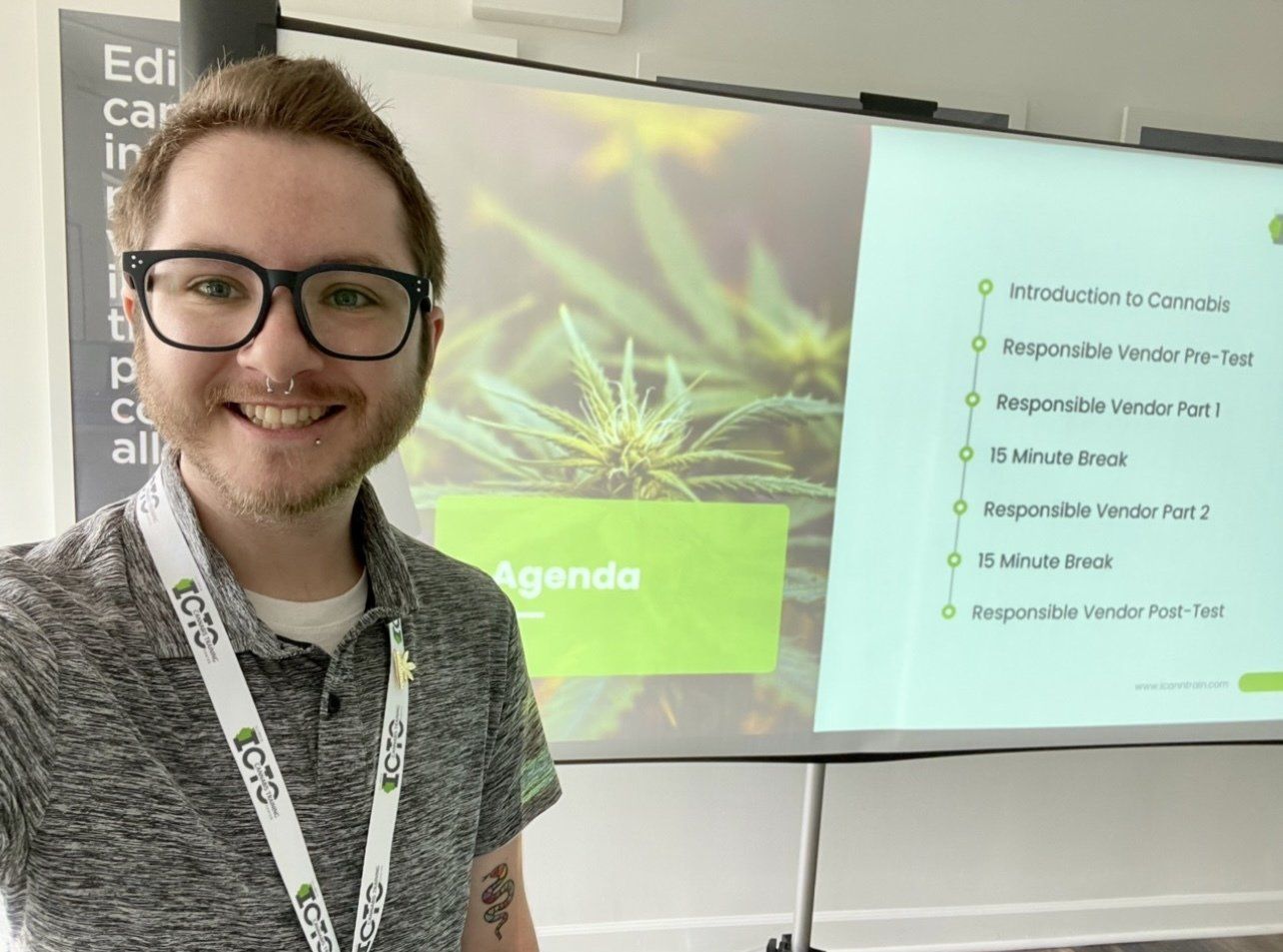
A man wearing glasses is standing in front of a projector screen.
By India Phoenix November 15, 2022
Becoming licensed to work in the Illinois cannabis industry is simple, if you meet the minimum requirements. In the state of Illinois, you must be at least 21 years old, pass a criminal background check, and complete the Responsible Vendor Training to become a certified budtender or cannabis industry worker.
A group of people are sitting around a table with a laptop on it.
By India Phoenix October 27, 2022
Start Your Career in Cannabis Now